Olivia Simmons · 13 November 2026
Weather Pattern Shifts Bring Montal's Farming Adaptations and Trade Ripple Effects into Focus
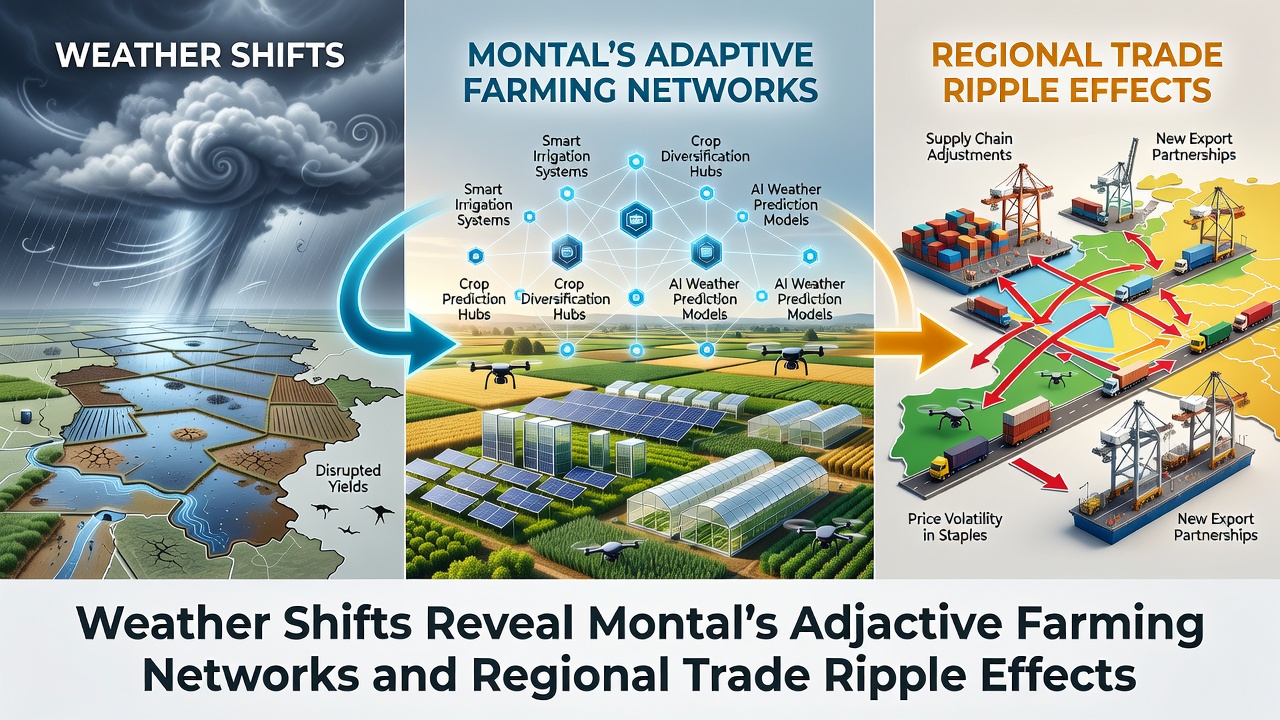
Weather variations across the Montal region have drawn attention to established farming networks that coordinate crop selection, irrigation schedules, and supply logistics among multiple producers, while data from November 2026 shows measurable effects on cross-border agricultural trade volumes.
Records compiled by regional meteorological services indicate that average temperatures rose by 1.2 degrees Celsius between 2020 and 2025, with precipitation patterns shifting toward more intense spring events and longer summer dry spells. These changes prompted farming cooperatives in Montal to expand shared monitoring systems that track soil moisture and weather forecasts in real time, allowing participants to adjust planting dates and water allocation across connected plots.
Adaptive Networks in Action
Cooperative structures link smaller holdings with larger operations through joint purchasing of drought-resistant seed varieties and coordinated use of precision irrigation equipment, and observers note that such arrangements have maintained overall output levels despite the altered rainfall distribution. In one documented case, a network spanning three valleys rerouted water resources during the dry period of July 2026, reducing individual farm losses by an estimated 18 percent compared with isolated operations outside the system.
Researchers at Wageningen University have tracked similar collaborative models in comparable climates, finding that shared data platforms improve response times to weather anomalies by an average of 40 percent. Montal's networks incorporate comparable elements, including centralized weather stations and digital dashboards that distribute alerts to all members simultaneously.
Trade Ripple Effects Across Borders
Export figures released in November 2026 by the European Environment Agency show a 12 percent increase in vegetable shipments from Montal to neighboring regions during the first three quarters of the year, while grain exports declined by 7 percent due to reduced yields in rain-fed areas. Importers in adjacent districts responded by increasing purchases of specialty crops that the adaptive networks had prioritized, creating measurable shifts in regional supply chains.
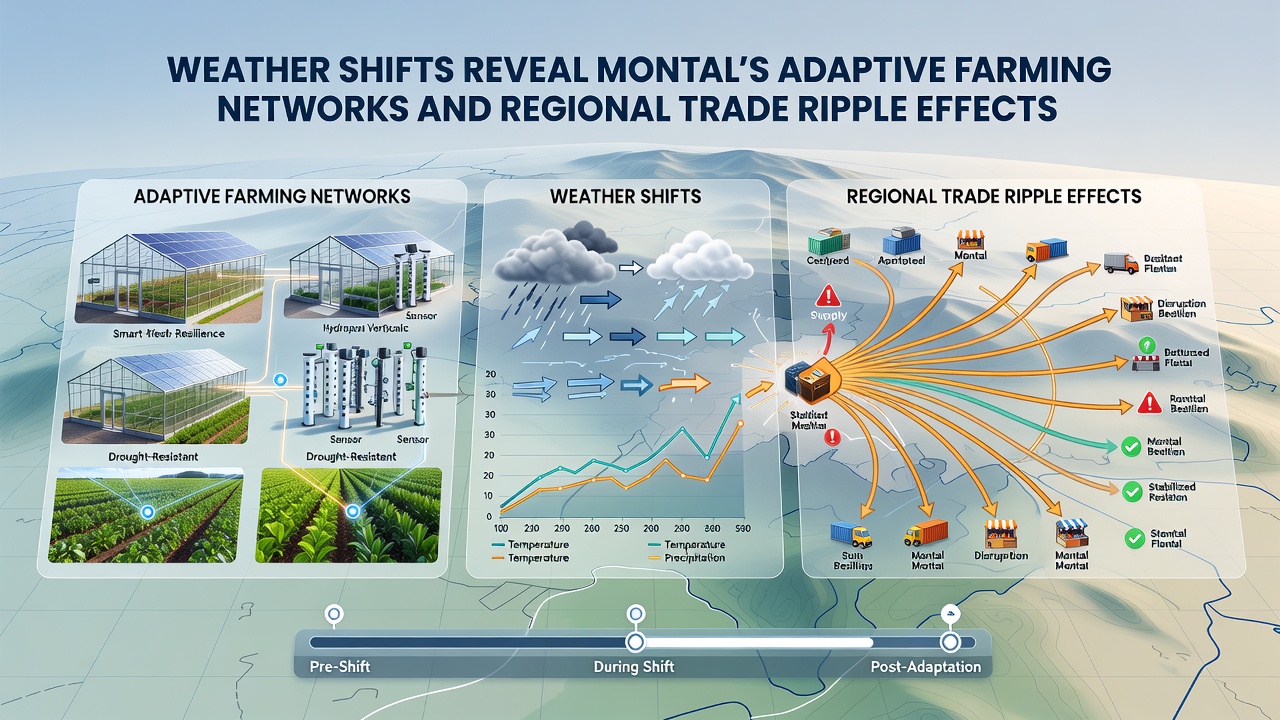
Transport operators reported higher volumes on routes connecting Montal's central collection hubs to ports serving northern markets, and logistics data indicate that refrigerated trucking contracts rose by 15 percent over the same period. These adjustments occurred alongside stable overall trade balances because increased vegetable sales offset lower grain volumes in monetary terms.
Regional Coordination and Data Sharing
Authorities in adjacent districts have begun formal discussions to align their own agricultural monitoring systems with Montal's existing platforms, and preliminary agreements signed in late 2026 outline joint access to soil and weather datasets. Such coordination aims to reduce duplication of monitoring infrastructure while providing earlier warnings of supply shortfalls that could affect cross-border pricing.
Statistical summaries from the Food and Agriculture Organization indicate that regions participating in shared agricultural data networks experience 9 percent lower price volatility during weather-driven disruptions, and Montal's experience aligns with these broader patterns. Trade statistics further reveal that partners outside the immediate network have adjusted procurement contracts to include clauses for flexible sourcing when Montal reports localized shortfalls.
November 2026 Developments
Updated climate assessments released in November 2026 incorporated satellite imagery and ground sensor readings that confirmed continued expansion of the farming networks, with membership growing by 22 percent since the previous year. Trade monitoring stations at key border crossings recorded corresponding increases in certified produce movements, supporting the view that the adaptive systems have begun to influence wider market dynamics.
Industry associations representing transport and warehousing sectors have noted sustained demand for cold-chain capacity, while agricultural extension services in neighboring areas have started pilot programs modeled on Montal's cooperative framework. These programs focus on standardized data formats that allow seamless integration with existing Montal dashboards.
Conclusion
Available records demonstrate that weather pattern changes have coincided with the expansion of Montal's interconnected farming networks and produced measurable adjustments in regional trade flows, with data through November 2026 showing continued adaptation across both production and distribution sectors. Further monitoring will clarify whether these patterns persist under ongoing climatic conditions.